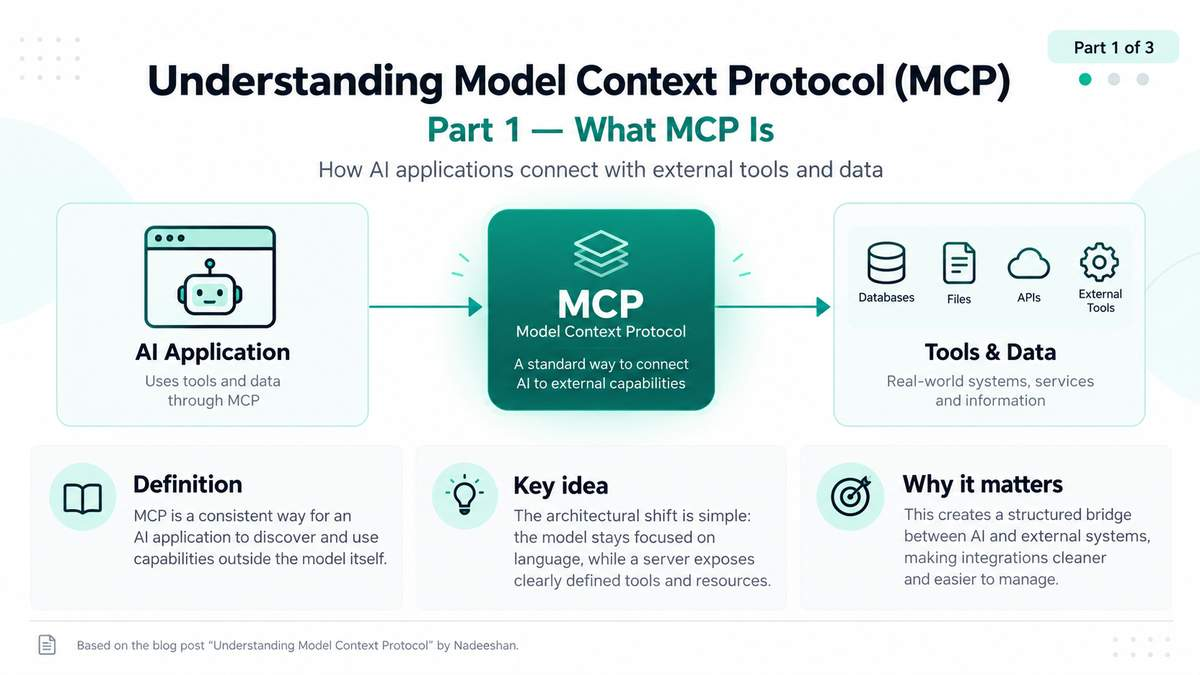
Model Context Protocol, or MCP, describes a consistent way for an AI application to discover and use capabilities outside the model itself. The useful shift is architectural: a model can remain focused on language while a server exposes carefully defined tools and resources.
The boundary matters
A small interface between the model and an external system makes responsibilities easier to reason about. The client manages conversation and permissions; the server owns the domain operation; the model chooses when a tool is relevant.
- Tools describe actions with explicit inputs and outputs.
- Resources provide context without hiding where it came from.
- Errors remain visible so the application can decide how to recover.
Designing a useful tool
A good tool is narrow, predictable and easy to test without a model. For a task system, that could mean separate operations for listing tasks, creating a task and marking one complete. Clear schemas reduce ambiguity and make the integration easier to evolve.
What I take forward
MCP is most valuable when it keeps integration work explicit. It does not remove the need for authentication, validation or observability; it gives those concerns a clear place to live.
← Back to Blog